Blog

  • Transforming EV Range Anxiety into Range Confidence

    Transforming EV Range Anxiety into Range Confidence

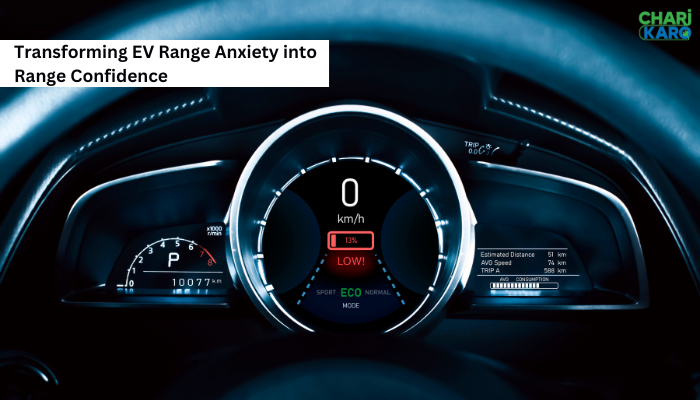
    Understanding EV Range Anxiety and Range Confidence: EV Range Anxiety is the worry of running out of power and being stranded, while Range Confidence is the assurance of ample battery capacity. Modern EVs require less frequent charging with increased battery capacity. Expanded EV charging infrastructure at home, work, and on-the-go enhances range confidence. Level 2 charging facilitates home and work charging, while DCFC supports fleets and road trips. The EV market is a present reality.

    “Embrace the Shift: The Electric Vehicle Market is Here!”

    As the electric vehicle (EV) market gains momentum, worries about finding charging locations are fading fast. Discover what future EV drivers should know for a secure and confident driving experience.

    What is EV Range Anxiety?

    Initially, early electric vehicle users often grappled with ‘range anxiety,’ fearing their battery electric vehicles (BEVs) would run out of power. A Cox Automotive study showed over 80% of consumers hesitated to adopt EVs, citing concerns about range anxiety, possibly due to uncertainty about the technology. Acknowledging that BEVs are unfamiliar terrain, it’s crucial to understand the entire EV network. Experts argue that range anxiety is largely psychological. Similar to drivers of traditional vehicles who differ in their frequency of gas station visits, EV drivers may adjust their charging habits based on personality and risk tolerance.

    A German study on psychological range highlighted that users tend to avoid stressful range situations by planning substantial range buffers. This concept is also relevant for conventional internal combustion engine (ICE) vehicles, but it is more critical for EV use. Fueling or charging involves monitoring and adapting vehicle usage, prompting drivers to establish personalized “buffers” based on risk assessment and self-awareness, ultimately reducing range anxiety.

    Why Does Range Anxiety Persist?

    Range anxiety, the fear of running out of battery power, has lingered despite advancements in electric vehicle technology. Understanding the reasons behind its persistence is crucial for the widespread adoption of EVs.

    1. Psychological Aspect:

    – Range anxiety is often rooted in psychological factors. – Studies suggest that, similar to traditional vehicle users varying in their gas station visits, EV drivers may exhibit diverse charging habits based on personality and risk tolerance. A German study highlights users’ tendency to plan for substantial range buffers, reducing the impact of anxiety-inducing situations.

    2. Comparisons with ICE Vehicles:

    – Range buffers are present in both EVs and internal combustion engine (ICE) vehicles. – While range buffers are common in ICE vehicles, they are deemed more critical for EV users. Understanding this distinction is essential for addressing concerns and fostering acceptance of EV technology.

    3. User Adaptation:

    – Drivers must adapt their habits to alleviate range anxiety. – As fueling or charging an EV involves monitoring and adapting vehicle usage, drivers need to assess their own risk tolerance and create personal range buffers. This self-awareness and adaptability can significantly reduce range anxiety.

    4. Technology Communication:

    – Effective communication of technology capabilities is key. – Automakers and industry stakeholders should focus on transparently communicating the capabilities of EV technology. Clear information on range, charging infrastructure, and advancements can empower consumers and mitigate apprehensions.

    5. Infrastructure Development:

    – Expanding charging infrastructure is vital. – The continued development of an extensive and reliable charging network is fundamental to addressing range anxiety. Government initiatives, collaborations, and investments in charging infrastructure can significantly contribute to easing concerns.

    How Expanding EV Charging Infrastructure Creates Range Confidence?

    As electric vehicles (EVs) gain traction, addressing range anxiety becomes pivotal for widespread adoption. The key solution lies in the continuous expansion of EV charging infrastructure. Here’s how the growing charging network plays a crucial role in instilling range confidence among EV users.

    1. Increased Accessibility:

    The proliferation of charging stations, both in urban centers and along highways, significantly enhances the accessibility of charging points. This increased availability offers EV drivers more options, alleviating concerns about finding a charging spot when needed.

    2. Extended Range Coverage:

    A broader charging infrastructure translates to an expanded range coverage for EVs. This means drivers encounter fewer situations where charging options are scarce, contributing to a greater sense of confidence, especially for long-distance travel.

    3. Reduced Wait Times:

    The growth in charging points leads to a reduction in waiting times. Improved charging density ensures quicker turnarounds at charging stations, enhancing overall convenience for EV owners and mitigating concerns about potential delays.

    4. Technological Advancements:

    Ongoing technological developments in charging systems improve efficiency and reduce charging times. These advancements not only contribute to the growth of the charging infrastructure but also boost the confidence of EV drivers in the reliability and speed of charging processes.

    Embracing Confidence

    As electric vehicles (EVs) become an integral part of the automotive landscape, the transition from range anxiety to range confidence marks a significant phase. This shift is driven by advancements in technology, the continuous expansion of charging infrastructure, and a growing understanding of the benefits of EVs. In this exploration, we delve into the current state of the EV market and how drivers are embracing confidence in their electric journeys.
    Download CharjKaro App to get rid of Range Anxiety.
  • Unveiling the Potential: Electric Vehicle Opportunities in India

    Unveiling the Potential: Electric Vehicle Opportunities in India

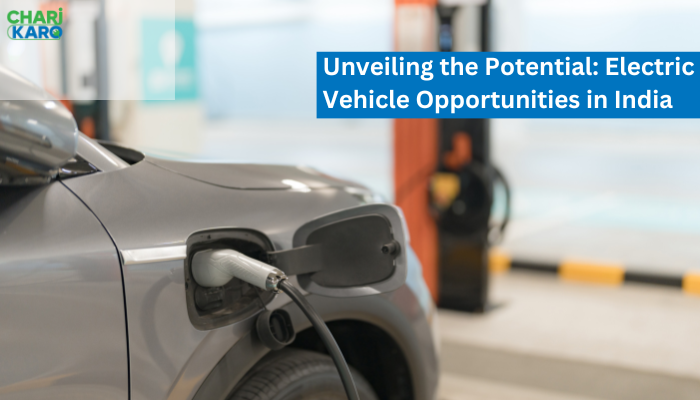
    As a major player in the global automobile market, India’s nationwide shift to electric vehicles is poised to be a pivotal moment on a global scale and within the country. Fueled by the Indian government’s commitment to sustainable transportation, increasing consumer interest in cutting-edge technologies, and the involvement of private entities investing in electric vehicle technology, the outlook for electric vehicles in India appears optimistic.

    The Surging Growth of India’s EV Market

    India stands out globally as a major market for both two- and three-wheeled vehicles, securing a position in the top five for both private cars and commercial vehicles. Notably, JMK Research reported a remarkable 12,43,258 electric vehicle (EV) units sold in the fiscal year 2023. These figures are anticipated to surge further, fueled by the collective efforts of central and state governments, along with private sector entities, actively promoting increased electrification across Indian roads.

    India Aims High

    Union Minister Nitin Gadkari has laid out ambitious targets for the Indian government, outlining the goal of achieving the following electric vehicle (EV) mix in India by 2030:

     Electric vehicles future plan report

    To achieve ambitious electric vehicle goals, India has implemented key policies like the National Electric Mobility Mission Plan (NEMMP) to reduce reliance on crude oil. The Faster Adoption and Manufacturing of (Hybrid &) Electric Vehicles (FAME) scheme further encourages EV adoption.

    Notably, the Finance Minister’s 2023 budget reduces customs duty and taxes to boost domestic production of lithium-ion batteries, essential for electric vehicles. Several state governments, including Assam, Telangana, Tamil Nadu, and Gujarat, have introduced favorable policies and initiatives to encourage electric vehicle (EV) manufacturing within their regions.

    These measures have sparked interest from private companies, marking the initiation of their participation in the EV market. This trend sets the groundwork for increased acceptance and usage of electric vehicles across India. The success of India in this endeavor is poised to yield substantial positive implications globally.

    India’s Environmental Prospects

    Moving to electric vehicles in India will profoundly affect the environment. Presently, the transportation sector is a leading source of pollution in the country. Consider New Delhi, where two- and three-wheelers alone contribute to 50% of surface PM 2.5 levels. Furthermore, India’s transportation sector consumes approximately one-fifth of the nation’s total energy. Given these statistics, the adoption of electric vehicles has the potential to bring about substantial environmental improvements in India across various domains.

    1. Curbing Air Pollution

    In India, vehicle emissions contribute to 27% of total air pollution and result in 1.2 million annual deaths. Embracing electric vehicles promises a substantial reduction in the global environmental impact caused by traditional Internal Combustion Engine (ICE) vehicles.

    2. Quieting Noise Pollution

    India faces significant noise pollution, with five cities ranking among the world’s loudest, as per the 2022 UNEP report. While vehicles aren’t the sole contributors, the introduction of EVs, lacking mechanical components like valves and gears found in ICE vehicles, is poised to decrease noise levels.

    3. Enhancing Operational Efficiency

    Traditional petrol or diesel cars convert only 17 to 21% of stored energy, whereas electric vehicles boast a 60% conversion rate of electrical energy from the grid. This shift to electric vehicles in India not only betters fuel production efficiency but also cuts operational costs for users, likely increasing the demand for EVs. Apart from these environmental impacts, the adoption of EVs in India opens up numerous economic opportunities for the nation.

    Economic Opportunities for India

    1. Fleet Operators

    Fleet operators can slash operating costs by over half with EVs, addressing challenges like high upfront costs through government incentives and reliable charging solutions.

    2. OEMs Potential

    The EV industry presents substantial opportunities for Original Equipment Manufacturers (OEMs) to create cost-competitive auto products, supported by government initiatives for indigenization.

    3. The Real Estate Sector

    Real estate stands to benefit from EV infrastructure needs, with demand for manufacturing units, industrial areas, and charging stations, creating ample opportunities for investors and developers.

    4. Consumer Trends

    India’s dynamic population, with a growing trend in upward mobility, presents a robust consumer base for EVs. The government and industry players are actively expanding charging networks to meet the rising demand.

    Smart Digital Solutions to Drive India’s EV Revolution

    India’s electric vehicle future is set for substantial growth, driven by government support, rising consumer awareness, and technological advancements. The nation is well-prepared to embrace sustainable transportation, witnessing a surge in EV demand, prompting infrastructure expansion and local battery tech development.

    Positioned as a key player globally, India’s automotive industry is pivotal in the EV shift. Private companies play a crucial role by providing intelligent digital solutions, linking government efforts and end-users. Their initiatives support fleet operators transitioning to EVs and OEMs delivering seamless driving experiences.

    Collaboration with local governments becomes instrumental in expediting charging station construction and raising awareness. This joint effort propels rapid EV industry growth. The collective commitment of public and private sectors is vital to realizing India’s ambitious EV goals. The right mix of innovation and investment has the potential to accelerate EV adoption, reshaping the country’s transportation scene and fostering a cleaner, greener future.

  • Hello world!

    Welcome to WordPress. This is your first post. Edit or delete it, then start writing!